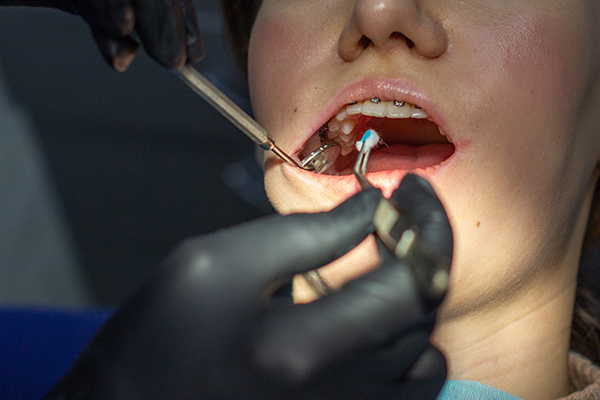
Orthodontics requires patience on the part of the wearer. They work their magic at a slow, steady pace, realigning the teeth and/or jaw to create the patient's desired smile.
Once the braces come off, the retainer becomes a new addition to a patient's daily routine. Here is a short explainer that goes over the retainer and its usage.
The role of retainers in orthodontics
Orthodontic treatment works by aligning the teeth and/or the jaw. These structures have a certain amount of elasticity to them, which means they can easily move back to their old positions, like a rubber band snapping back to its original form. This is where orthodontic appliances like retainers come in.
A retainer maintains the new alignment of straightened teeth. It acts like a brace that keeps the teeth from shifting back to their old positions. The retainer remains in play until the dentist finds that the teeth are permanently settled into their new positions.
The process of fitting a retainer is simple. First, the dentist will take a mold or impression of the patient’s new smile. They will send the impression to a dental lab, where a dental technician will fabricate a custom retainer. Once the dentist receives the finished product, they will call their patient in for a fitting. In the case of a fixed retainer, the dentist will bond it onto the patient’s teeth. There are many different types of retainers, however.
Types of dental retainers
A dentist may bond a retainer directly onto the patient’s teeth. Usually, this type of retainer goes on the back of the teeth, where it remains invisible. It takes the form of dental wire that attaches to the back of the teeth with the help of dental cement.
Then there is the removable retainer, which comes in different variations. The most popular is the clear (transparent) retainer, which takes the form of a custom dental tray that encases a person’s teeth. A second variation is the plate retainer, which has two parts. The first is the plastic plate that sits on the back of the teeth and out of sight. The second component is a metal wire that runs across the front of the teeth.
Taking care of retainers
A person who needs a retainer needs to be deliberate about caring for it. Care and maintenance range from cleaning to damage prevention and periodic dental checkups. Here are a few pointers:
- Clean a removable retainer on removal; rinse it before wearing it again
- Soak the retainer for only a short amount of time; otherwise, it may lose its shape
- Clean the case that a retainer sits in when not being worn
- Avoid subjecting the retainer to heat, falls, little children, or pets
- Know that retainers are vulnerable to wear and tear, so they may need replacement once in a while
- Get routine dental checks so the dentist can monitor both the teeth and the retainer
People who wear permanent retainers need to take extra care as they clean their teeth. A dentist will supply detailed instructions that cover oral hygiene while wearing permanent retainers.
How long you should wear a retainer
Orthodontic treatment for a severe bad bite requires the patient to wear their retainer for months or even years. A person with a slight misalignment may only need to wear their retainer at night and only for a few months.
Our dentist will be happy to walk with you through orthodontic treatment. They will give you personalized advice that will help you ensure that your well-aligned teeth that will last a lifetime. Call us to find out how orthodontics will boost both your confidence and your oral health.
Request an appointment here: https://www.dentistinlongbranch.com or call Garden State Healthy Smiles PC at (732) 504-6914 for an appointment in our Long Branch office.
Check out what others are saying about our dental services on Yelp: Orthodontics in Long Branch, NJ.
Related Posts
What Can Happen If Wisdom Teeth Are Not Removed?
There is no golden rule that makes it compulsory for you to have your wisdom teeth removed. However, most people have at least one of them taken out at some point in …
When It Is Time to Seek Professional Gum Disease Treatment
Knowing when to seek professional gum disease treatment helps preserve gum health, stop bone loss, and protect natural teeth. Early attention reduces inflammation before it spreads to the supporting bone, affecting chewing …
3 Pros and Cons of Dental Veneers
Dental veneers enhance the smile with a blend of beauty, efficiency, and durability. These thin shells bond to the front of teeth to correct chips, stains, gaps, and minor misalignment with precision. …
Endodontics Explained: FAQs
You may be unfamiliar with endodontics or may be confused about this branch of dentistry. Not everyone will need to see a dental specialist. Still, a dentist with endodontics training offers important …